Source: http://adamcooperf1.com/2011/02/23/abu-dhabi-gp-prepared-to-twin-with-bahrain/
Source: http://adamcooperf1.com/2011/02/23/abu-dhabi-gp-prepared-to-twin-with-bahrain/
Source: http://nascar.speedtv.com/article/cup-jeff-gordon-back-on-winning-track-nascar-sprint-phoenix/

Source: http://f1fanatics.wordpress.com/2011/01/31/ferrari-launch-their-2011-car-the-f150/
 RENNtech has unveiled the new GLK350 Hybrid Pikes Peak Rally Car, which is an updated version of their winning concept from the Mercedes-Benz tuner challenge at the 2008 SEMA Motor Show.
Philip FotheringhamParker AJ Foyt Giorgio Francia Don Freeland
 |
Source: http://blogs.espnf1.com/paperroundf1/archives/2010/11/campaign_launched_to_save_team_1.php
Juan Manuel Fangio Nino Farina Walt Faulkner William Ferguson
Formula 1 is undergoing a quiet revolution.
In two years' time, the cars that line up on the grid for the start of the 2013 season will be vastly different from those that raced in 2010.
Governing body the FIA has already announced that the current 2.4-litre normally aspirated V8 engines will be replaced by 1.6-litre turbocharged versions with integrated energy recovery systems.
Now, BBC Sport can reveal that, driven by this big change to the engine regulations, the cars will also undergo their own huge revisions.
To the casual observer, they will still look like F1 cars and, importantly, will still go like them. But within the limitations of an open-cockpit, single-seater racing car with exposed wheels, they will be very different from current machines.
Gone will be the huge, snowplough front wings that have been required since the last major change of rules. Gone will be the high, chunky rear wings. Gone, too, will be the high-revving shriek of the engines.
In their place will be a car with much smaller front and rear wings and the much flatter, lower-pitched sound of a lower-revving turbo.
And critically - although largely invisible - there will be a shaped underfloor, replacing the flat bottoms that have been on F1 cars since 1983.

The 1982 Ferrari - a 126C2 - also possessed a small front wing
These external changes reflect a major change in the philosophy behind the cars and, as with the turbo engines, it is a case of back to the future. As the 1980s dominate the latest High Street fashions, so F1 is borrowing from technologies last seen then and updating them for the 21st century.
F1 last saw turbo engines in 1988. The last time cars had shaped underbodies was 1982. Those were the days of 'ground effect', when designers created huge amounts of aerodynamic downforce - and high cornering speeds - by accelerating the air under the car through the use of curved underfloors to create a 'venturi effect'. This was enhanced by the use of 'skirts', which sealed the underbody and prevented air leaking out of the sides.
We are not talking about a return to those days but the general principle is the same. Just as the cars in the 1979-82 period had small front and rear wings, so will the cars of 2013 and beyond.
The difference now is that whereas in the late 1970s and early '80s aerodynamics in F1 cars were still relatively in their infancy and designers were simply chasing as much as they could, now they are highly refined. And the men behind the proposed new rules are using the underfloor of the car to create efficient - but strictly limited - downforce.
The FIA recognised that if it was to make such a major change to the cars, it needed to be done as effectively and credibly as possible. So to help draw up the new rules they asked two of the most respected and experienced designers they could find - Patrick Head and Rory Byrne.
Between them, Head, the engineering director of Williams, and Byrne, now retired but formerly of Benetton and Ferrari, have won a total of 17 constructors' titles and 15 drivers' titles. They were first approached by FIA president Jean Todt in March 2010.
Among the provisos Head and Byrne were given were: a) at the very least, make sure the changes did not make overtaking any harder than it already is; and b) make the cars a bit harder to drive - the target being for a driver to be able to be on full throttle for only about 50% of the lap, as opposed to the current average of 70%.
The new regulations are being fine-tuned by FIA race director Charlie Whiting this week before being sent to the 12 F1 teams for analysis. In the new year, they will be critiqued at the sport's Technical Working Group, a group of leading engineers who effectively define the technical rules.
Head says "sure as hell there'll be some small changes" there. The basic philosophy, though, is expected to stay the same, while Head says the shaped underfloor is "inevitable".
"It all starts with the fact that we are only going to have roughly 65% of the amount of fuel, and a (limited) fuel flow rate," he explains. "When you're very limited on fuel, it's very clear you've got to reduce drag enormously. OK, the tyres are a very high proportion of the drag but we decided not to put tiny skinny tyres on it because it's still required to go around corners quickly.
"So the next thing you turn to is the massive rear wing we're running at the moment and as soon as you replace that with a much smaller one, it's 'Oh, we've lost all our downforce, so what can we do?' So inevitably you end up with a shaped underside."
This idea has been around for a long time - as long ago as 1998, when another working group, led by the late Dr Harvey Postlethwaite, also suggested reducing the sizes of front and rear wings and re-introducing shaped underfloors. The idea was canned by then FIA president Max Mosley.
Back then, the motivating factor was to improve the racing. In theory, cars designed this way can follow each other more closely than modern F1 cars.
Currently, drivers experience a severe lack of grip when they get to within about a second of a car in front because the airflow to their cars, particularly over the critical front wing, is badly disturbed.
In theory, with smaller wings and a greater proportion of the total downforce coming from under the car, there is less disturbance in the wake of the car in front, so a following car loses less aerodynamic downforce. It therefore retains more grip, allowing drivers to get closer to the car they want to overtake, making passing easier.
Under these new rules, any benefit to the racing will be secondary. The first goal is improving the cars' efficiency.
But it's just possible that, in chasing a goal that is all about keeping F1 in step with a world of diminishing fossil fuels, the effect will be to make overtaking easier.
Chastened by years of rule changes aimed at making cars more raceable that made no discernible difference, those involved are cagey about that for now. But one senior figure will at least admit the thought is on their minds.
"One of the fundamental parts of this," he said, "was that it wouldn't make it worse. But we do believe that if you can ensure there's less disturbance in the wake, that's good."
Source: http://www.bbc.co.uk/blogs/andrewbenson/2010/12/formula_1_is_undergoing_a_quie.html
Source: http://feedproxy.google.com/~r/formula-f1/~3/JtNj8l_88d4/

 Force India?s third season in Formula One saw them finish seventh in the Constructors Championship with 68 points.
Since 2008, Force India have improved considerably year by year and the team can be very proud of what they have achieved in a short amount of ...
Source: http://feedproxy.google.com/~r/Formula1Fancast/~3/ZXUElHbonsI/season-review-force-india


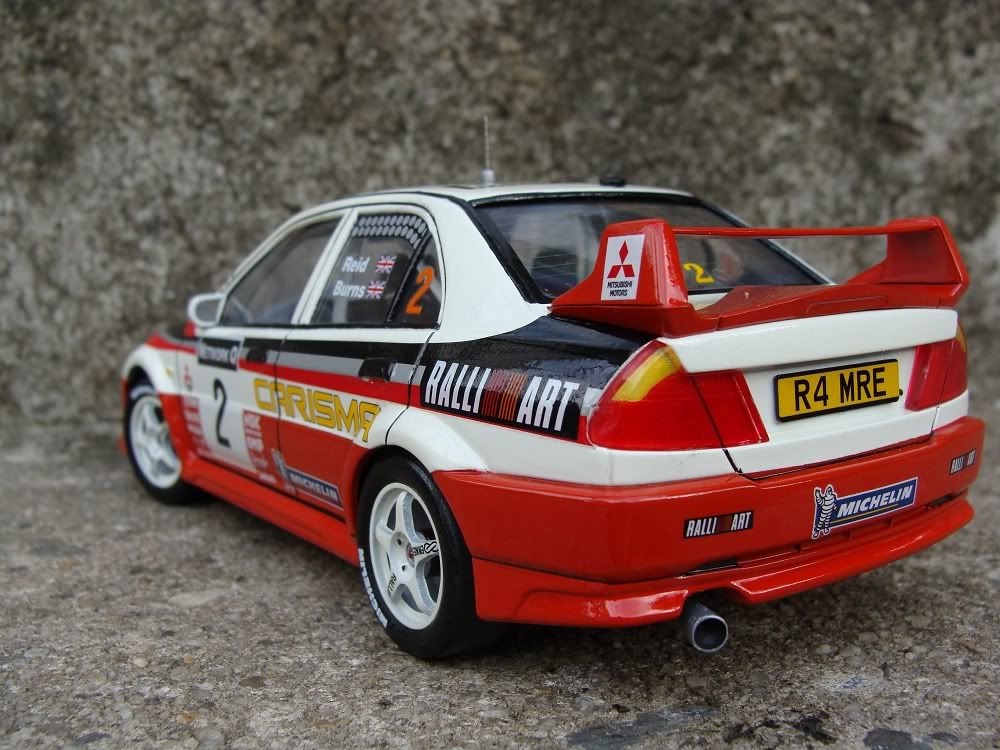
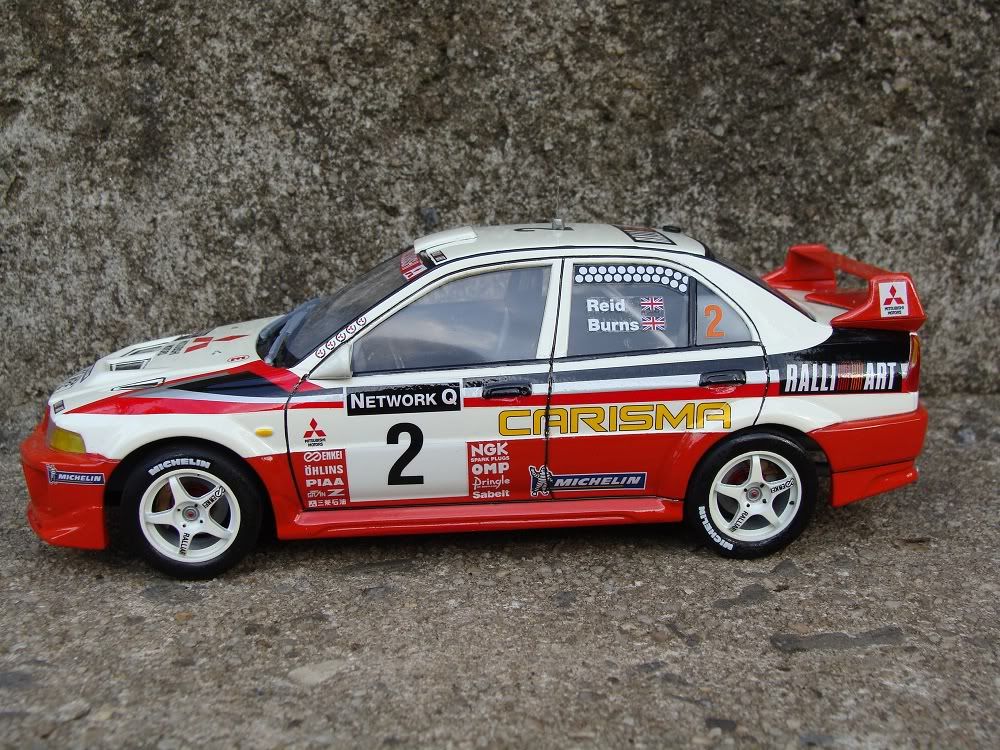
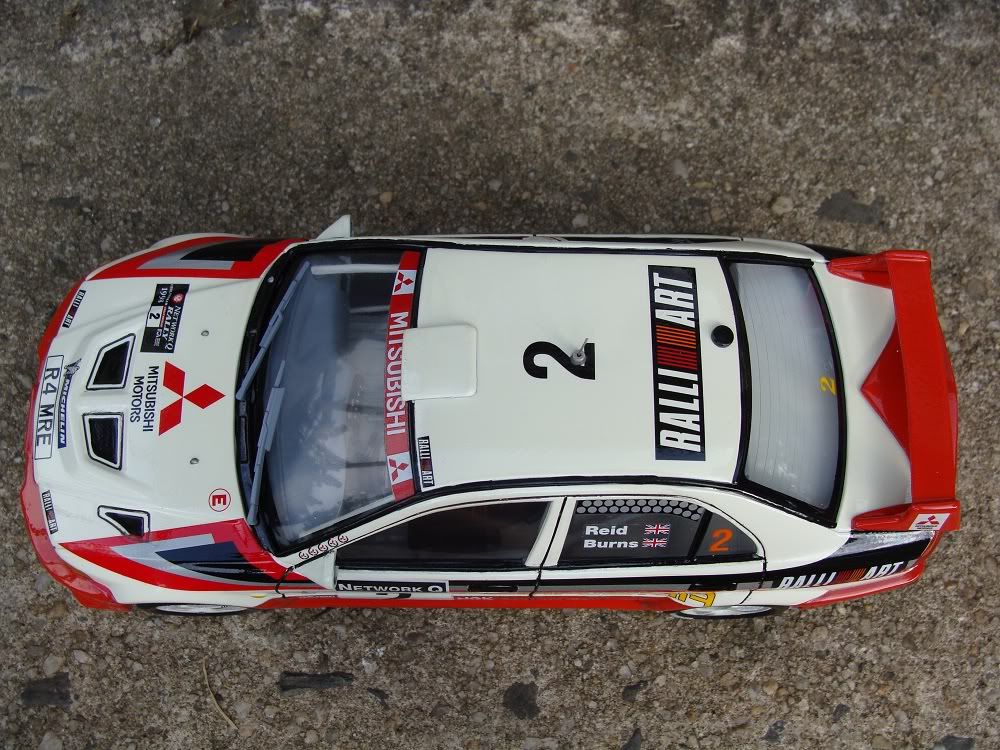
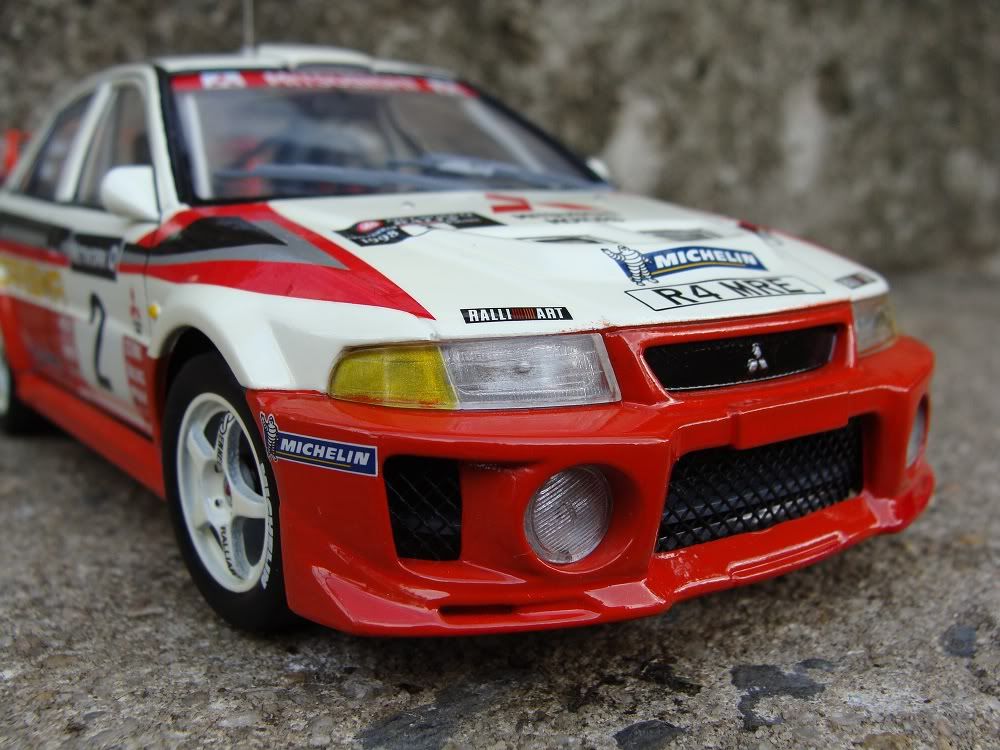
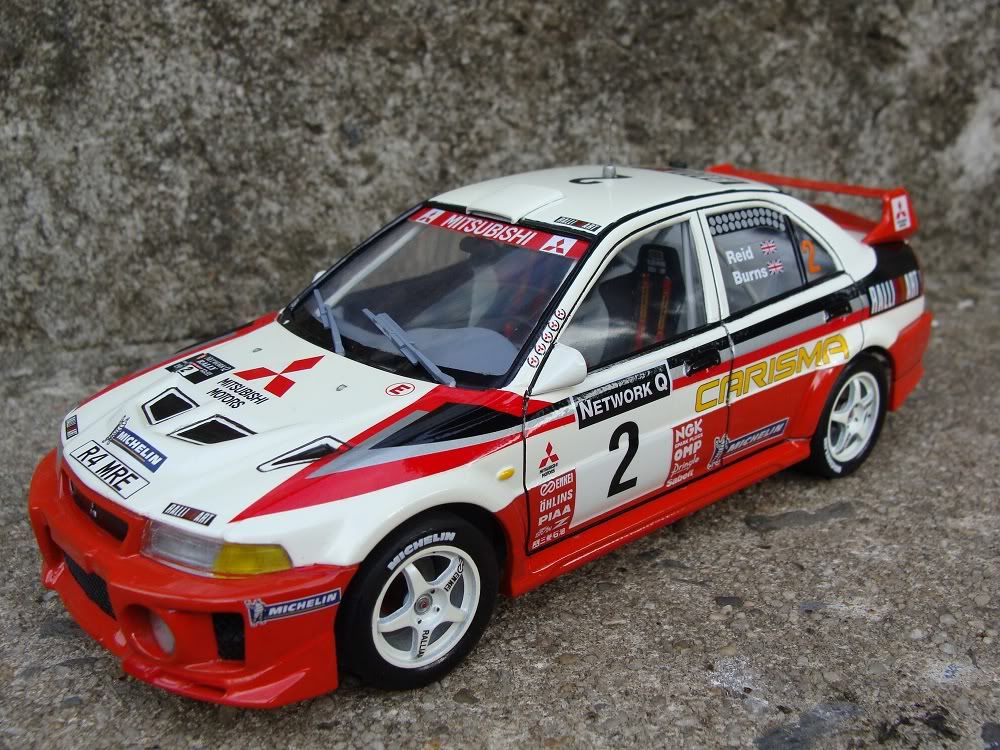
Simple but enjoyable kit.
thanks for looking.
Russell
Source: http://cs.scaleautomag.com/SCACS/forums/thread/943726.aspx
Valencia
On a cold January morning in Valencia it was hard for Red Bull to bask in their glories of last season's double championship success as they unveiled their 2011 challenger.
World champion Sebastian Vettel wisely wore a woolly hat and a blond beard as he and team-mate Mark Webber shiveringly unsheathed the RB7.
There was even an early attempt to burst Red Bull's bubble when a plucky journalist asked in the team's first media conference of the new season, "Have you thought that this car could be complete junk?"
Webber stared into the middle distance, designer Adrian Newey fashioned a face of indifference and it was left to Vettel to answer in shock, "No!"
In order to see this content you need to have both Javascript enabled and Flash Installed. Visit BBC Webwise for full instructions. If you're reading via RSS, you'll need to visit the blog to access this content.
By the end of the first day, Vettel had emphatically answered the question on the track by holding sway at the top of the timesheets.
The world champion was more than 0.7 seconds ahead of the next 2011 car, which happened to belong to the man he beat to the 2010 crown, Ferrari's Fernando Alonso.
Times don't count for much on the first day of winter testing as the teams are furiously tinkering with the cars, running with unknown amounts of fuel on board and learning how to adapt to the Pirelli tyres, which will be used instead of Bridgestone this season.
But Vettel's marker was undeniably a statement of intent - Red Bull are out to defend both titles.
"It's a good sign," Vettel commented after his first day back in the cockpit. "Generally it's better to be on top of the ranking than being at the other end.
"What we achieved [in 2010] made us all very proud and no-one can take it away from us.
"But we have to develop on how good we were last year or the others will pass us. We have to stay focused, keep learning and keep trying to get better. If we just have the same approach as last year then we won't move forward."
Red Bull were cagey about the specific design changes and upgrades to the 2011 car.
Perhaps you cannot blame them when some of the other teams were hovering amid the media throng at the Red Bull launch trying to get a glimpse of Newey's latest creation. One rival team representative was even spotted unsubtly snapping away with a long-range zoom lens.
Red Bull simply say that the car is an evolution of its 2010 championship-winning vehicle and that a lot of the changes are "beneath the skin".
The principal tasks for all teams is in incorporating 2011's regulation changes which include the addition of a movable rear wing to aid overtaking, the return of 2009's Kers energy recovery and power boost system and the removal of the double diffuser, as well as gaining an understanding of the new Pirelli tyres.
Unlike last season, when they skipped the first test to spend more time honing the car at their Milton Keynes factory, Red Bull arrived at the opening test determined to take full advantage of the 15 days of testing before the first race of the season next month.
"We felt that the car was ready to be released," explained Newey. "It's always a balance of research time versus development time in terms of performance and reliability. I was keen to get the car out for the first test.
"It's difficult to design the car for the Pirelli tyres. Packaging for Kers is a challenge and no doubt McLaren, Ferrari and Mercedes will have Kers and will be competitive and so for no other reason we need to get it to work for performance off the line.
"In terms of performance we are all struggling to recover the downforce we lost through the double diffuser.
"It is a period of nervousness for us but also a period of excitement."
While Newey grapples with the nuances of designing another peerless car, team boss Christian Horner is tasked with avoiding a repeat of the tensions within his team that threatened to derail last season's championships.
Friction between Vettel and Webber memorably spilled over onto the track at the Turkish Grand Prix when Vettel crashed out in an attempt to pass his team-mate for the lead.
"They'll push each other hard but I don't think they'll push each other too hard as they did in Istanbul," Horner commented.
"They have number one and number two on their cars but that is in many ways irrelevant. We give both drivers equal priority and that's the way we will treat them in 2011."
In their first appearance ahead of the new season, Red Bull presented a united front as a team hungry for more success. With the world champion leading the field, the fastest car on the track and the largest motorhome in the paddock, they already look every inch like being the team to beat when racing resumes next month in Bahrain.
Source: http://www.bbc.co.uk/blogs/sarahholt/2011/02/champions_red_bull_the_centre.html
 |
?Here, after all, is a young man, already dubbed ?Baby Schumi? by Germany?s tabloid press, winning the first of what will presumably be multiple world championships, and all at the tender age of 23. Plenty of time yet to match Schumacher's incredible haul of seven world titles. And yet, their phenomenal ability to drive racing cars apart, there is little similarity between the two men. ?There are still lingering doubts over his racing ability but with such blistering qualifying pace he is nearly always leading from the front anyway. Vettel is set for multiple world championships. Just don?t call him Baby Schumi.?The Guardian?s Paul Weaver says it was difficult to begrudge Vettel his moment of glory after he won the first of what will be many world titles. He also looks back at some of the season?s highlights.
?An amazing Formula One season produced its final twist here on Sunday when Sebastian Vettel, who had never led the title race, won his first world championship. It is difficult to begrudge him his glory, for he had more poles (10) than any other driver and shared the most wins (five) with Fernando Alonso. There will be red faces as well as red cars and overalls at Ferrari, though, for deciding to bring their man in when they did, only to see him re-emerge into heavy traffic. ?Among the highlights, and every race felt like a highlight after the bore-start in Bahrain, there was that wonderful beginning to his McLaren career by Jenson Button, who won two of his first four races, even though he couldn't keep up the pace, especially in qualifying. ?Hamilton once again drove his heart out, and outperformed a car that looked a little too ordinary at times. He was superb in Montreal. Then there was Webber, the Anglophile Aussie who was the favourite among most neutrals to win the title. There was that spectacular crash when he ran into the back of Heikki Kovalainen and the most famous of his four wins, at Silverstone, when he said to his team at the end of the race: 'Not bad for a No2 driver.' ?But in the end there was only one German who mattered. It was the remarkable Vettel. This will be the first of a clutch of championships for him.?The Independent?s David Tremayne focuses on the plight of the other title contenders, writing it is easier to feel more sorry for one than the other.
?It was impossible not to feel for both Webber and Alonso. Yet while a frustrated Alonso gestured at Petrov after the race, the Australian, predictably, refused to complain about his pitstop timing. ?A world championship seemed an inevitable part of Sebastian Vettel's future, but it came a little sooner than most expected, after his recent tribulations. You wouldn't bet against several more, and if that record-breaking streak continues, perhaps even Schumacher's achievements will be overshadowed.?And the Mirror?s Byron Young elaborates further on the petulant behaviour of Fernando Alonso on his slowing down lap after his title dreams ended behind the Renault of Vitaly Petrov.
?Fernando Alonso was hurled into more controversy last night for a wild gesture at the former Lada racer who cost him the title. But the Spaniard brushed off accusations he gave Russian Vitaly Petrov the finger for ruining his title hopes by blocking him for 40 laps as they duelled over sixth place. "The Ferrari ace was caught on television cruising alongside the Renault driver on the slowing down lap and gesticulating from the cockpit. Petrov was unrepentant: "What was I supposed to do? Just get out of his way, pull to the side? I don't think that is how we race. It was important for the team for me to get points."
Source: http://blogs.espnf1.com/paperroundf1/archives/2010/11/vettel_set_for_titles_aplenty_1.php

Source: http://joesaward.wordpress.com/2011/02/22/bahrain-and-f1/
Source: http://formula-one.speedtv.com/article/f1-abu-dhabi-willing-to-go-back-to-back-with-bahrain/
JeanChristophe Boullion Sebastien Bourdais Thierry Boutsen Johnny Boyd

Source: http://f1fanatics.wordpress.com/2011/02/07/marussia-virgin-racing-launch-their-2011-car/
Source: http://feedproxy.google.com/~r/formula-f1/~3/JtNj8l_88d4/
 |
The way I feel at the moment, why stop? I do it because I enjoy it. And yesterday is gone. I don't care what happened yesterday. What else would I do? People retire to die. I don't get any individual pleasure because we don't win races or titles in this job. I'm like most business people. You look back at the end of the year and you see what you've achieved by working out how much money the company has made. That's it.
Source: http://blogs.espnf1.com/paperroundf1/archives/2010/10/bernie_ecclestone_no_plans_to.php
Sir Frank Williams, who has been given the 2010 Helen Rollason award for outstanding achievement in the face of adversity, has never seen his disability as an excuse not to succeed at the very highest level.
The owner of the Williams Formula 1 team has been a quadriplegic since breaking his neck in a car crash in March 1986 but he has continued to oversee his company with evangelical zeal and commitment. In fact its biggest successes came after his life-changing accident.
Williams does not so much love Formula 1 as he is consumed by it. He still goes into the factory seven days a week, with Christmas Day his only time off. And his ability to carry on regardless, resolutely refusing to let his disability affect his day-to-day work, continues to humble those who know him.
When Williams suffered his injury, at the age of 43, doctors pointed out to those close to him that, based on the examples of other people with similar problems, he would be lucky to live another 10 years.
Nearly 25 years later, Williams continues to attend most of the races in an increasingly marathon F1 calendar, and remains one of the most widely respected men in the sport.
His attitude to his disability is simple - it's his own fault he ended up that way so he had better just get on with it.
If he ever felt differently, there is no evidence for it.
In her brilliant book about Frank, his wife Ginny gives an eye-opening account of the days after the accident.
Williams was a very active man and a keen runner but even when his life was still in danger immediately afterwards, he never - not even to his wife - betrayed any sense of self-pity, depression or any of the other emotions that might be expected of someone in his situation.
He talks about it very little, and simply says to Ginny that they have had several good years of one kind of life together and now they just have to get used to a different one.
Williams's partner, the team's director of engineering Patrick Head, says: "I'm sure Frank had some terrible moments thinking about the change in his life but he's never been one to sit around and be sorry for himself.
"Frank has always been very pragmatic about 'what is the problem and how can I deal with it' and applied that to himself and his injury.
In order to see this content you need to have both Javascript enabled and Flash installed. Visit BBC Webwise for full instructions. If you're reading via RSS, you'll need to visit the blog to access this content.
"His enthusiasm and positive attitude always overcome any difficulties he has."
This is the approach Williams has applied to his disabilities ever since.
Looking back, he says in his clipped manner: "I've had a wonderful life; wouldn't dream of changing anything, truthfully."
Williams suffered his injuries when he crashed his hire car while racing his driver Nelson Piquet to the airport after a pre-season test in the south of France.
He discusses the accident now with the same detachment he displayed in recovering from it.
"The car banged over a few times and I'm ashamed to say it was either the sixth or seventh rollover accident I'd had in my life," he says.
"I remember the sharp pain in my neck. I thought: 'Wow, rolling over isn't supposed to hurt that much.' The car finished upside down and I tried to reach for the safety belt to get myself out and I couldn't do it.
"I knew I was going to have the big one but I couldn't slow myself down."
The first few months after his accident he spent focusing on getting into a condition that would allow him to get back to attending races.
"He runs himself with military precision," says Head, "and once he'd found out what the things were that would cause him problems, he adapted his lifestyle to give himself the best opportunities. He's very disciplined about that sort of thing - it's remarkable what he has done since then.
"Frank's always been quite private in his own emotions and in control of his interactions with other people. Once we'd got used to the fact that he wasn't the same person he was before, that he was in a wheelchair, things just sort of carried on as normal."
Stopping competing in F1 never occurred to Williams.
"The thought of retiring or selling the team never crossed my mind," Williams says, "and I also suppose recognised subconsciously it would be a great daily antidote for the difficulties I would find myself in. It's a fantastic job, a very exciting business, highly competitive, always something to worry about, which can be quite healthy, actually."
At the time of his accident, his team were about to embark on one of several periods in which they have dominated the sport.
But success was a long time in coming. Getting to the top of F1 was famously a struggle - Williams operated his team out of a phone box at one stage in the early 1970s, so tight had money become. Once he had achieved success, though, he did not let it go for a very long time, regardless of the misfortune that was to befall him.
The turning point was joining forces with Head, whose first car for the team in 1978 established them as serious contenders for the first time.
In 1979, they missed out on the title only through poor reliability and an eccentric scoring system. But they made no mistake in 1980, with Australian Alan Jones romping to the championship.
They remained more or less at the top of F1 from then until Williams's accident, just missing out on the drivers' title in 1986 but winning it in 1987. But when at the end of that year they lost their supply deal with Honda, producer of the best F1 engines, people wondered whether, with the boss in a wheelchair, they would cope.
That was counting without the incredible commitment and desire of this remarkable man.

Williams and Head have formed a formidable partnership for the last 30 years
Before long, Williams had replaced Honda with Renault, and the team went on to its greatest successes - particularly the 1992 and 1993 seasons, when a car bristling with technology such as active suspension brushed the opposition aside with Nigel Mansell and then Alain Prost at the wheel.
The team have variously dominated F1 in the early 1980s, the mid-'80s, and the early to mid-'90s, winning drivers' titles with many famous names - Jones, Keke Rosberg, Piquet, Mansell, Prost, Damon Hill and Jacques Villeneuve, along with nine constructors' championships.
They have also provided the platform for some of the sport's most brilliant engineers to make their names - among them Adrian Newey, now in charge of design at world champions Red Bull, and Ross Brawn, who ran Ferrari's technical department in their dominant period with Michael Schumacher and now boss of the Mercedes team.
But there have been dark times, too - particularly the death of Ayrton Senna at the 1994 San Marino Grand Prix only three races into his Williams career.
It remains one of William's greatest regrets: "I felt that we had been given a great responsibility providing him with a car, and we let him down."
The last few years have seen Williams slip from competitiveness. They have not won a world title since Villeneuve's in 1997 and not taken the chequered flag since the final race of the 2004 season.
And for the first time there have recently been signs that the 68-year-old Williams is slowing down a little.
In November 2009, he and Head sold 10% of the company to Austrian businessman Toto Wolff, with the two men's own shareholdings reducing proportionately from 65% (Williams) and 35% (Head).
And last summer, Williams handed his role as chairman responsible for the day-to-day running of the team to Adam Parr, with Williams remaining as team principal and Head still in charge of the technical side.
When he made the announcement, Williams emphasised that while he was planning for succession, he was certainly not retiring.
As Williams's current lead F1 driver, the veteran Brazilian Rubens Barrichello, says: "I've never met anyone with so much passion for motor racing - it's truly amazing."
So much passion, indeed, that when he had to make a decision a few years ago between building a wind tunnel that would help make the cars go faster and keeping the private plane that allowed him to attend the farthest-flung races, he chose the wind tunnel.
Williams's voice is quieter now - talking is uncomfortable for him, as a result of his disability - and his eyes a little more watery. But a few minutes in his company leaves you in no doubt that his team's current lack of success pains him greatly, and that he is as committed as ever to getting them back to the top of F1.
Source: http://www.bbc.co.uk/blogs/andrewbenson/2010/12/frank_williams_honoured_for_ac.html


Nico Hulkenberg admits he is focused on trying to find a team for next year's Formula One season.
The German was driving for Williams last season and secured his maiden pole position at the Brazilian Grand Prix, the penultimate race in the championship, before learning he had lost his seat over the final weekend at Abu Dhabi.
His drive at Williams has been taken by GP2 title winner Pastor Maldonado and ...

Any fan of supercars remembers the mighty F1 from McLaren. With its BMW sourced V12, center seat driving position and gold lined engine cover the car was truly exotic. It held many records and for longer than most other machines are able to. It shot the company right to the top of the automotive stratosphere and helped them grow into a healthy and sustainable racing company. Several years ago McLaren spent a reported 300 billion pounds to design and build the McLaren Technology Center meant to encompass all aspects of the company. That was finished back in 2003, so what have they been up to in Woking, England for the past 7 years? Quite simply they have been designing the next and possibly most formidable challenger to the Ferrari 458 Italia.
Engineers and designers at McLaren are currently developing several new and highly innovative sports cars to bring to the global market. The MP 4-12C is now in production signaling the beginning of the rebirth of a company that has not had a distinct production vehicle for over a decade. Its stunning performance and efficiency have caught the eyes of the automotive press since McLaren first began testing mules at their facility and now we get to see it in final form.
UPDATE 02/22/2011: When you’re a British Formula One racing driver, you get the privilege of hopping in just about any car and taking it for a few laps. Lewis Hamilton is the perfect example of how being a 2008 Formula One World Champion has its perks when he got the chance to perfect his sliding technique in a McLaren MP 4-12C. Check out the video by theMotorweb after the jump!
Hit the jump for more details on the 2011 McLaren MP 4-12C.
McLaren MP4-12C originally appeared on topspeed.com on Tuesday, 22 February 2011 18:00 EST.
Source: http://www.topspeed.com/cars/mclaren/2011-mclaren-mp4-12c-ar78914.html
Source: http://automotive.speedtv.com/article/autos-nicole-lyons-becomes-car-warrior/
Jochen Rindt John RiseleyPrichard Giovanni de Riu Richard Robarts
Anybody know where I can get a 69 trans am spoiler? I'd like to get one for a 69 motion camaro I'm planning. Thanks in advance.
Jaws
Source: http://cs.scaleautomag.com/SCACS/forums/thread/943530.aspx
Source: http://feedproxy.google.com/~r/formula-f1/~3/lSsJYyJ-1Iw/
Giancarlo Fisichella John Fitch Christian Fittipaldi Emerson Fittipaldi
Well here I go again with a off the wall project.
And Yes to all the emails I have received, the rumors are true, I am working on a conversion kit for the Revell Monagram 71 Plymouth gtx kit, to transform it to one of several Satellite Roadrunner versions.
Amt put out a promo of a 72 RR, It is this kit that is lending its parts for transformation. The scales are different between the two kits, so there is a lot of scratch building. especially on the rear bumper and the RR grill. I am also mastering a NON-rally dash that will also work on charger kits.
Anyway, here are a few pictures, as poor as they are.
By the way, if you visit my Trail you can see my REAL 72 Plymouth Satellite.

Opening doors, how cool is that?!

Notice how the RR grill is too small for the bumper

See the difference in size between the smaller 72 rear bumper and the 71. Note the separate tail light lens for the 72 I have made. It will be cast in clear red.

Here you can see my progress on creating a non rally dash. I plan on making the instrument cluster separate from the dash.
Source: http://cs.scaleautomag.com/SCACS/forums/thread/821185.aspx
| |
Source: http://blogs.espnf1.com/paperroundf1/archives/2010/11/campaign_launched_to_save_team_1.php

Ferrari chief Stefano Domenicali has cooled talk that the Italian capital Rome could host a grand prix in the near future.
There have been calls for several years for an F1 race to be held in the Eternal City but plans have never really got off the ground.
Circuit designer Hermann Tilke did put forward a proposal that would have seen the race take ...

 DAYTONA BEACH, Fla. Related posts:
Source: http://doxcar.com/journeyman-brian-keselowski-gets-sponsor-for-daytona-500/
Confidence was not in short supply at McLaren as they unveiled their dramatic-looking 2011 Formula 1 car on Friday.
While most teams chose to reflect the austerity of the times by taking the wraps off their new cars in the pit lane at the first pre-season test in Valencia this week, McLaren instead went for a grand reveal in the centre of Berlin.
Mechanics wheeled in a chassis and suspension and attached the wheels and bodywork to the car in front of a crowd of interested spectators in Potsdamer Platz, a public space that sits on the fringe of the old Berlin Wall.
Fortunately, the appearance of the new MP4-26 car justified such a flamboyant approach, its sweeping lines and radical design innovations immediately obvious.
Equally obvious was the expectation the team have invested in the spectacular-looking machine. Lewis Hamilton and Jenson Button could barely stop themselves smiling as they contemplated the car they both hope will take them to a second drivers' world championship.
Button talked about his "beautiful new baby"; Hamilton of his confidence that McLaren would be more competitive than in 2010 - when they won five races and both men led the championship at various stages of the season.
Hamilton and Button were bullish about their chances this season, and looking at the new car it was easy to see why.
For some time now, there have been rumours that McLaren had pushed the boat out with their new car, and that it would be probably the most innovative of the season. It did not disappoint.
From the intricately curved front wing back, the new McLaren looks the part. It bristles with innovation - including an extra air intake on the airbox behind the driver, needed to cool the hydraulics and gearbox because the car has been packaged so tightly; L-shaped sidepod openings designed to get more airflow to the rear wing; and a particularly long wheelbase, which helps maximise downforce.
Team principal Martin Whitmarsh, sharing his drivers' optimism, added that there was more to come before the first race of the season in Bahrain on 13 March. "Be warned," he said, "we have not shown you everything," adding that the team had some "fantastic innovations" to come.
"I'm brimming with excitement," Whitmarsh said, "I think it's a fantastic car."
This has been a week of new-car launches, and much attention has focused on novelty.
In Valencia, there was Renault's new exhaust system, which exits out of the front of the sidepods and blows along them and under the floor in a bid to increase downforce. There was Williams's tiny gearbox. Even humble Toro Rosso were at it with a double floor.
Poor Ferrari - whose car does have innovations on it even if they are not as immediately obvious as some - and Red Bull - who have concentrated on evolving the car that was the class of the field in 2010 - were virtually ignored.
Until the cars actually went out on to the track, that is. At which point, guess what? Just as for most of 2010, the Red Bull and Ferrari were the quickest things out there, world champion Sebastian Vettel setting the pace on day one from Fernando Alonso, before the Spaniard, last season's runner-up, turned the tables, on day two.
They were beaten only by Robert Kubica's Renault on the final day, when the track was quicker because more rubber had gone down and Vettel and Alonso had gone home.
And there's the rub. F1 isn't all about innovation. It's about getting your car working together as a package, about making the numbers add up, about what engineers call "L over D". That's lift over drag - getting as much downforce (negative lift) as you can for as little drag as possible.

Hamilton and Button cannot hide their admiration for their new F1 car. Photo: Getty
In recent years, this has been what has let McLaren down. The team innovated last year, too, introducing the F-duct aerodynamic device, which stalled the rear wing on the straights, therefore allowing the team to either run more downforce than their rivals without the attendant straight-line speed penalty or the same downforce and be faster on the straights.
Even with this, though, the McLaren was not as aero-efficient as the Red Bull or Ferrari, and that continues a trend that has been apparent for the last few seasons.
Last season was a step forward from 2009, when McLaren started the year with a car that even they admit was awful. It improved through the year to the point that Hamilton was able to win a couple of races, but was still some way behind the pace-setters on tracks where efficient downforce is critical.
Even in 2007 and 2008, when McLaren respectively should have and did win the drivers' title, Hamilton believes the car was fundamentally not as good as the Ferrari against which it was competing. "Since I've been here, we've never had a car that was particularly strong aerodynamically," he said at one point last season.
That, in a nutshell, is the big question mark hanging over McLaren on the eve of the 2011 season.
Their drivers are world-class, Hamilton arguably the fastest in the world, and Button - not far behind him on pure pace - possibly the cleverest; the team is well-resourced; and they have fabulous engineering depth. But will the car ultimately be quick enough?
McLaren are aware of where they have fallen short in recent years, and director of engineering Tim Goss talks about "setting ourselves a very ambitious aerodynamic target for 2011".
But, for all the gorgeous curves on their new car, only in Bahrain next month will they begin to get a definitive answer as to whether those targets have either been achieved, or were high enough.
Source: http://www.bbc.co.uk/blogs/andrewbenson/2011/02/confidence_was_not_in_short.html
 The Boca Raton Concours d' Elegance just got a little more interesting as the event has announced plans to hold a star-studded supercar auction.
  Emerson Fittipaldi in his heyday |
Source: http://blogs.espnf1.com/paperroundf1/archives/2010/11/five_ways_to_improve_f1.php
Stefano Modena Thomas Monarch Franck Montagny Tiago Monteiro
Source: http://feedproxy.google.com/~r/formula-f1/~3/Fl75eRNiaF4/
Charles Pozzi Jackie Pretorius Ernesto Prinoth David Prophet
Confidence was not in short supply at McLaren as they unveiled their dramatic-looking 2011 Formula 1 car on Friday.
While most teams chose to reflect the austerity of the times by taking the wraps off their new cars in the pit lane at the first pre-season test in Valencia this week, McLaren instead went for a grand reveal in the centre of Berlin.
Mechanics wheeled in a chassis and suspension and attached the wheels and bodywork to the car in front of a crowd of interested spectators in Potsdamer Platz, a public space that sits on the fringe of the old Berlin Wall.
Fortunately, the appearance of the new MP4-26 car justified such a flamboyant approach, its sweeping lines and radical design innovations immediately obvious.
Equally obvious was the expectation the team have invested in the spectacular-looking machine. Lewis Hamilton and Jenson Button could barely stop themselves smiling as they contemplated the car they both hope will take them to a second drivers' world championship.
Button talked about his "beautiful new baby"; Hamilton of his confidence that McLaren would be more competitive than in 2010 - when they won five races and both men led the championship at various stages of the season.
Hamilton and Button were bullish about their chances this season, and looking at the new car it was easy to see why.
For some time now, there have been rumours that McLaren had pushed the boat out with their new car, and that it would be probably the most innovative of the season. It did not disappoint.
From the intricately curved front wing back, the new McLaren looks the part. It bristles with innovation - including an extra air intake on the airbox behind the driver, needed to cool the hydraulics and gearbox because the car has been packaged so tightly; L-shaped sidepod openings designed to get more airflow to the rear wing; and a particularly long wheelbase, which helps maximise downforce.
Team principal Martin Whitmarsh, sharing his drivers' optimism, added that there was more to come before the first race of the season in Bahrain on 13 March. "Be warned," he said, "we have not shown you everything," adding that the team had some "fantastic innovations" to come.
"I'm brimming with excitement," Whitmarsh said, "I think it's a fantastic car."
This has been a week of new-car launches, and much attention has focused on novelty.
In Valencia, there was Renault's new exhaust system, which exits out of the front of the sidepods and blows along them and under the floor in a bid to increase downforce. There was Williams's tiny gearbox. Even humble Toro Rosso were at it with a double floor.
Poor Ferrari - whose car does have innovations on it even if they are not as immediately obvious as some - and Red Bull - who have concentrated on evolving the car that was the class of the field in 2010 - were virtually ignored.
Until the cars actually went out on to the track, that is. At which point, guess what? Just as for most of 2010, the Red Bull and Ferrari were the quickest things out there, world champion Sebastian Vettel setting the pace on day one from Fernando Alonso, before the Spaniard, last season's runner-up, turned the tables, on day two.
They were beaten only by Robert Kubica's Renault on the final day, when the track was quicker because more rubber had gone down and Vettel and Alonso had gone home.
And there's the rub. F1 isn't all about innovation. It's about getting your car working together as a package, about making the numbers add up, about what engineers call "L over D". That's lift over drag - getting as much downforce (negative lift) as you can for as little drag as possible.
Hamilton and Button cannot hide their admiration for their new F1 car. Photo: Getty
In recent years, this has been what has let McLaren down. The team innovated last year, too, introducing the F-duct aerodynamic device, which stalled the rear wing on the straights, therefore allowing the team to either run more downforce than their rivals without the attendant straight-line speed penalty or the same downforce and be faster on the straights.
Even with this, though, the McLaren was not as aero-efficient as the Red Bull or Ferrari, and that continues a trend that has been apparent for the last few seasons.
Last season was a step forward from 2009, when McLaren started the year with a car that even they admit was awful. It improved through the year to the point that Hamilton was able to win a couple of races, but was still some way behind the pace-setters on tracks where efficient downforce is critical.
Even in 2007 and 2008, when McLaren respectively should have and did win the drivers' title, Hamilton believes the car was fundamentally not as good as the Ferrari against which it was competing. "Since I've been here, we've never had a car that was particularly strong aerodynamically," he said at one point last season.
That, in a nutshell, is the big question mark hanging over McLaren on the eve of the 2011 season.
Their drivers are world-class, Hamilton arguably the fastest in the world, and Button - not far behind him on pure pace - possibly the cleverest; the team is well-resourced; and they have fabulous engineering depth. But will the car ultimately be quick enough?
McLaren are aware of where they have fallen short in recent years, and director of engineering Tim Goss talks about "setting ourselves a very ambitious aerodynamic target for 2011".
But, for all the gorgeous curves on their new car, only in Bahrain next month will they begin to get a definitive answer as to whether those targets have either been achieved, or were high enough.
Source: http://www.bbc.co.uk/blogs/andrewbenson/2011/02/confidence_was_not_in_short.html
Source: http://feedproxy.google.com/~r/f1fanatic/~3/QqpvD_F-B1g/
Juan Manuel Fangio Nino Farina Walt Faulkner William Ferguson

Ferrari had become a well known racing team and producer of sports cars for the public, but its Gran Touring machines were still lacking refinement. Enzo may have thought little of this, but as time has gone on these larger Ferrari models have done very well for the company and now, with the new FF model, they will introduce 4-wheel drive to the company?s lineup for the first time.
At the 1966 Geneva Motor Show Ferrari introduced its new 330 GTC model. With the 330 GT 2+2 model, Ferrari already had a less sporty car for sale, so the 330 GTC needed to be both Grand Tourer and true performance car. Utilizing a shorter wheelbase and modified engine, the 330 GTC Coupe is widely regarded as one of the best overall Ferrari models of all time.
Canepa Design in California is currently offering a Silver 1965 model with 47,033 miles on the odometer. It has been restored and features a clean title.
Hit the jump for more details on the Ferrari 330 GTC.
Ferrari 330 GTC originally appeared on topspeed.com on Saturday, 19 February 2011 23:00 EST.
Source: http://www.topspeed.com/cars/ferrari/1968-ferrari-330-gtc-ar105207.html
Johnny Cecotto Andrea de Cesaris Francois Cevert Eugene Chaboud